


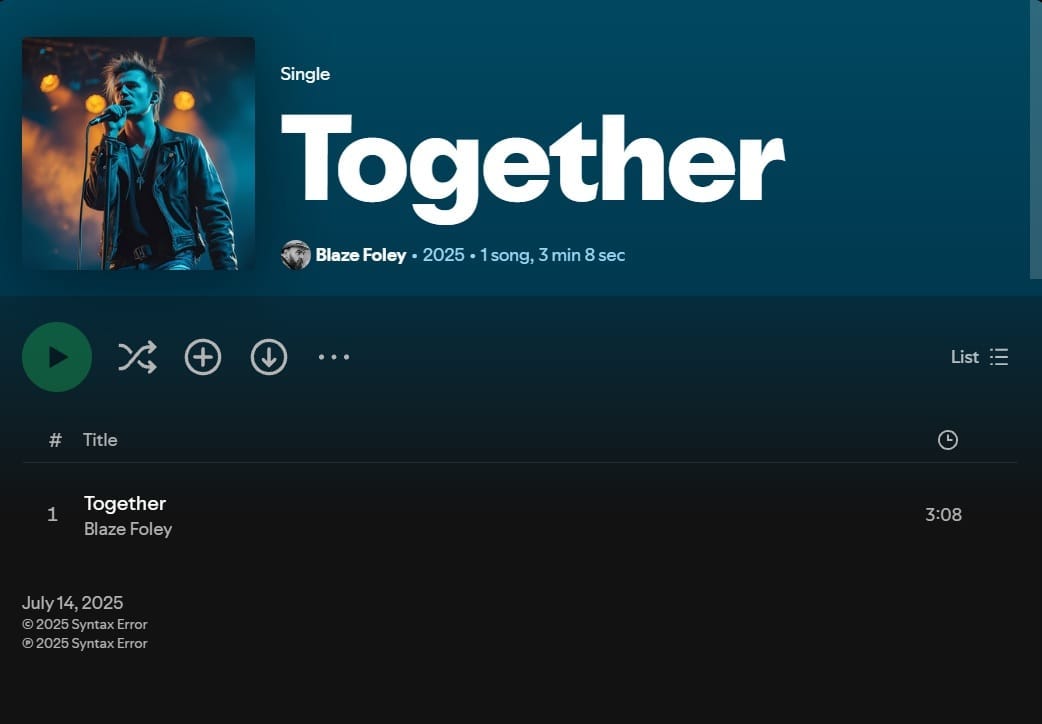
There's something deeply unsettling about hearing a "new" song from an artist who's been dead for over three decades. Yet that's exactly what happened last week when Spotify allowed an AI-generated track titled "Together" to appear on the official page of Blaze Foley, a beloved country singer-songwriter who was murdered in 1989. The song, accompanied by AI-generated artwork of a man who looked nothing like Foley, sounded like what one industry insider described as the work of "an AI schlock bot."
This isn't just a glitch in the system; it's a symptom of something far more troubling.
As musicians increasingly abandon Spotify in droves and the platform's ethical foundations crumble, we are witnessing what may be the beginning of the end for the streaming giant that once promised to revolutionize music.
The Digital Grave Robbing Scandal
The Blaze Foley incident wasn't isolated. AI-generated songs have also appeared on the pages of other deceased artists, including Grammy-winning songwriter Guy Clark, who died in 2016. These tracks were uploaded without permission from estates or record labels, representing what amounts to digital grave robbing of artistic legacies.
Craig McDonald, who owns the record label that manages Foley's catalog, didn't mince his words:
"It's harmful to Blaze's standing that this happened. It's kind of surprising that Spotify doesn't have a security fix for this type of action."
His frustration reflects a broader industry sentiment that Spotify has abandoned its responsibility to protect artistic integrity.
The company's response? They removed the songs only after being contacted by media outlets, claiming they violated their "Deceptive Content policy."
But the damage was done, and the question remains:
How many other deceased artists have been exploited by AI-generated content that no one noticed? 🤔From Music to Military | Daniel Ek's Troubling Pivot
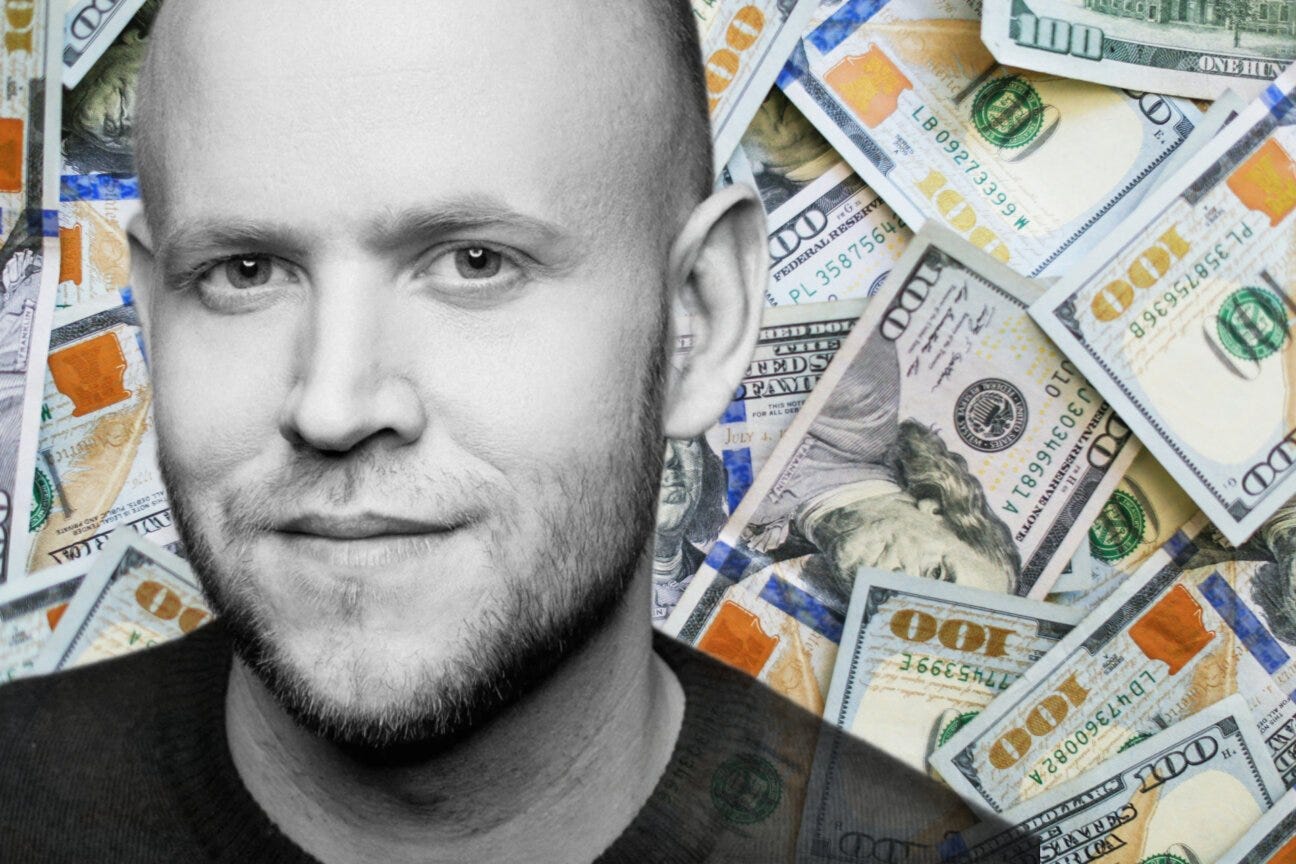
Perhaps even more disturbing than the AI music scandal is what Spotify CEO Daniel Ek has been doing with the company's profits.
In June 2025, Ek led a massive €600 million investment in Helsing, a German defense technology company that specializes in AI military software and manufactures drones.
Helsing isn't just any tech company; it develops AI systems for weapons and has created the "Centaur" system that "integrates advanced AI pilots into the cockpits of existing and future fighter aircraft." The company also produces military drones like the HX-2.
Ek now serves as Chairman of Helsing, making his dual role as music mogul and military tech investor impossible to ignore.This investment represents more than just business diversification; it's a fundamental betrayal of the artistic community that built Spotify's success. As Jamie Stewart from the band Xiu Xiu put it,
"Spotify is essentially using money stolen from almost every musician in the entire world to murder people."
The Great Exodus | The Mass Artist Walkout Has Begun
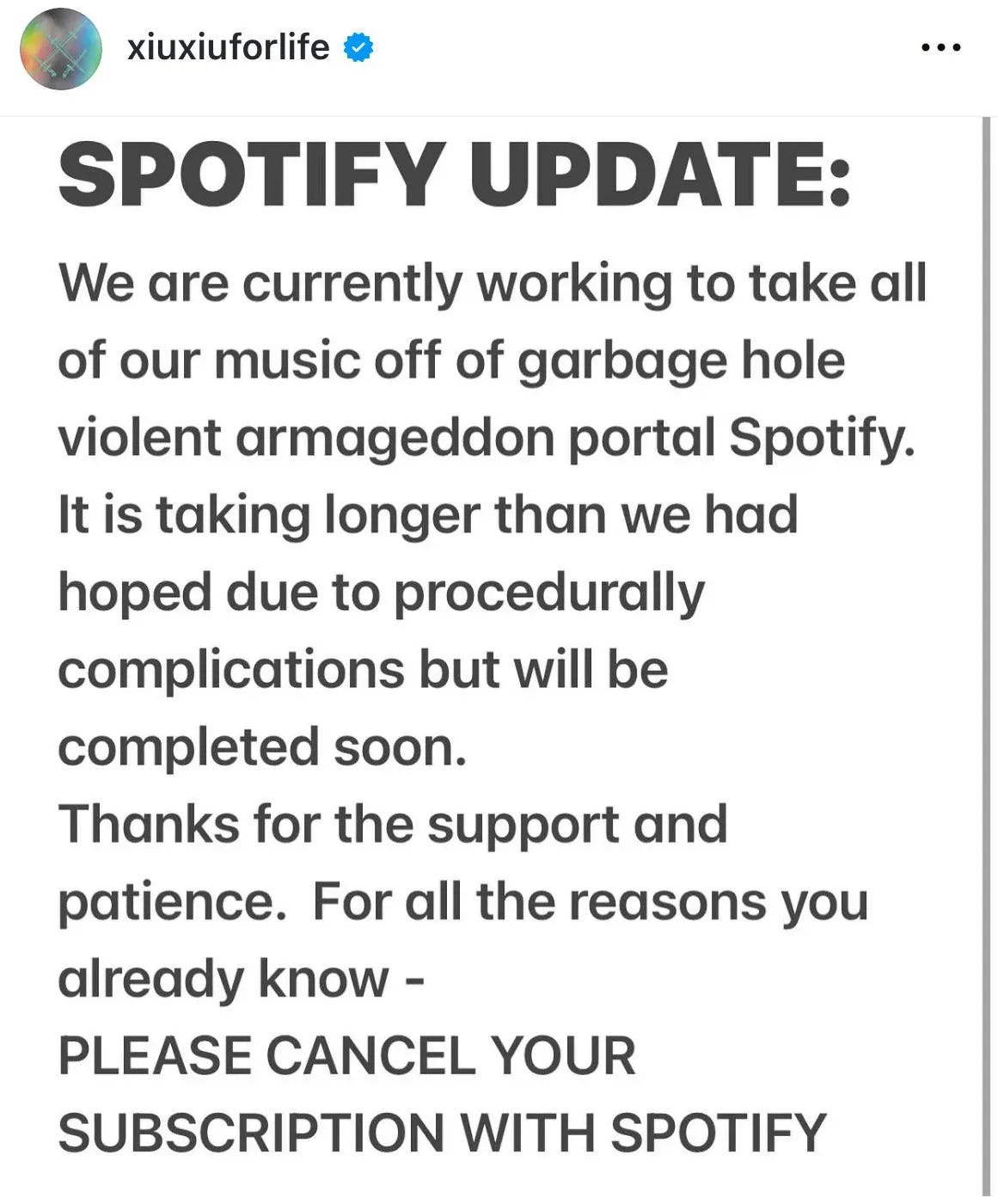
The backlash has been swift and decisive. Experimental rock band Xiu Xiu announced they are removing their entire catalog from Spotify, posting on Instagram:
"We are currently working to take all of our music off of garbage hole violent armageddon portal Spotify.”
with captions saying:
“Reason: Spotify uses music money to invest in AI war drones."
Xiu Xiu isn't alone. Fellow experimental band Deerhoof pulled their entire catalog from the platform earlier this year, stating:
"We don't want our music killing people. We don't want our success being tied to AI battle tech."
The process isn't simple as both bands have noted that removing music from Spotify involves significant "procedural complications." This difficulty in leaving the platform has created what some see as a form of digital imprisonment for artists who want to distance themselves from Ek's military investments.
The Streaming Model Was Always Broken
These recent controversies have exposed deeper structural problems with Spotify's business model that critics have highlighted for years. The platform operates on a "market share" system where artists are paid based on their proportion of total streams rather than a fixed rate per play.
This system has created a race to the bottom where music has become disposable “content.”
Spotify claims to distribute approximately 70% of its revenue to rights holders, but the actual compensation artists receive is often minuscule. The platform has been accused of unfair compensation practices, with some musicians earning what "a mediocre busker could earn in a day" after months of streaming.
The company has also faced criticism for allegedly creating "fake artists" for playlist placement and engaging in "pay-for-play" practices. These tactics prioritize algorithmic manipulation over genuine artistic discovery, further devaluing music as an art form.
The Challenge of Breaking Free
For artists wanting to leave Spotify, the path forward isn't straightforward. The platform's dominance means that abandoning it often means sacrificing significant reach and revenue, at least initially.
However, alternatives are emerging that offer more artist-friendly models.Bandcamp has gained recognition as a genuinely artist-first platform, taking only 10-15% commission on digital sales and allowing artists to set their own prices. The platform's "Bandcamp Fridays," where they waive all fees, demonstrate a commitment to artist welfare that Spotify has never matched.
SoundCloud offers community-driven discovery with real-time feedback systems that create deeper engagement between artists and fans. While not as lucrative as subscription-based platforms, its model prioritizes artistic community over algorithmic optimization.
YouTube Music combines audio streaming with visual content opportunities, allowing artists to create multimedia experiences and access multiple revenue streams through ads, memberships, and live streaming.
Can A New Underground Movement Emerge?
Some industry observers see parallels between the current moment and the rise of college radio in the 1990s, which emerged as an alternative to corporate-controlled AOR (Album Oriented Rock) radio. Just as college radio created space for alternative and indie music to flourish outside mainstream channels, a new movement may be coalescing around platforms and distribution methods that exist (or are building) "outside of the Spotify space entirely."
This emerging ecosystem prioritizes direct fan relationships over algorithmic reach, sustainable compensation over maximum streams, and artistic integrity over platform convenience.
Blockchain-based platforms, NFT releases, and virtual reality concerts could also represent the beginning of what's possible when artists and fans connect directly.
The key insight driving this movement is that success doesn't require platform dependence. Instead, it requires building "a sustainable system that connects you directly with fans who value your work."
The Moral Reckoning
At its core, the Spotify crisis is about more than business models or platform features; it's about ethics in the digital age.
When a company uses revenue generated by artists (& stolen from artists) to fund military technology, it creates a moral contradiction that many musicians and listeners can no longer ignore.
Daniel Ek's investments represent what critics call "something evil," forcing individuals to confront whether they want to support a platform that funnels music revenue into weapons development. For an increasing number of artists and fans, the answer is a resounding NO.
The AI-generated songs on deceased artists' pages serve as a perfect metaphor for Spotify's broader approach:
Extracting value from artistic legacy without consent, compensation, or respect for the creative process. It's digital colonialism applied to culture itself.
Charting a Path Forward
The exodus from Spotify represents the early stages of a fundamental restructuring of how music is distributed and consumed. As platforms like Bandcamp demonstrate sustainable, artist-friendly models, and as blockchain technology enables new forms of direct fan engagement, the future of music distribution is being written by artists & fans willing to prioritize ethics over convenience.
For listeners, the choice is becoming equally clear. Supporting platforms that respect artists and avoid funding military technology isn't just about music; it's about the kind of digital ecosystem we want to create.
Every subscription dollar is a vote for the values we want to see reflected in our cultural institutions.
The streaming revolution was supposed to democratize music and empower artists. Instead, it created new forms of exploitation while concentrating power in the hands of a few tech executives. But revolutions can be reversed/ replaced, and the current moment suggests that artists and fans are ready to build something better.
The question shouldn’t just be whether it's time to abandon Spotify, as for many, that decision has already been made. The question is what we'll build to replace it, and whether we have the courage to prioritize artistic integrity over algorithmic convenience. The future of music depends on how we answer.
🫵🏼 What's YOUR take? Are YOU ready to make the switch to more ethical music platforms?
💬 Share YOUR thoughts and experiences with Spotify alternatives in the comments below.
🤝🏼 Join us at Vinyl Culture as we continue exploring ways to preserve and evolve an authentic music culture in an age dominated by algorithms and corporate interests. We are building something that will revolutionize the music industry by creating an Artist-centred and Community-driven platform, leveraging both the offline & online medium. We will empower artists by allowing them to share their art and creativity directly with the fans. More on this soon…
1️⃣0️⃣0️⃣0️⃣+ SUBSCRIBERS have now joined our mission to protect The Soul of Music in the age of algorithmic manipulation & AI. Thanks a lot to each & every one of you!! 🫵🏼 🤝🏼🙌🏻 Together, we can make a difference.


Love your article, thanks a lot for sharing!
I think the real problem goes even deeper than Ek's military investments and AI grave robbing.
The tragedy isn't just that algorithms replaced vinyl or CDs - it's that they replaced human curation. When I discovered Nirvana as a teenager, we had MTV, radio DJs who chose music based on artistic merit, not data points. The mainstream back then operated on entirely different criteria than today's algorithmic mainstream.
We've turned music lovers into passive users who just hit play on whatever the algorithm serves up. The platform exists because we've allowed ourselves to become this kind of user base.
Artists have always had to pay their dues, but historically that struggle came with gradual compensation and community support. Today's platforms could use their massive revenues to genuinely support emerging artists during this crucial phase. Instead, as you show, those funds get funnelled into weapons development.
The question isn't just what we build next - it's how we prevent this concentration of power from happening again.
Bandcamp has potential, but it needs to evolve. They should offer curated playlists created by humans, not algorithms, subscription-based curation services where people pay a few euros monthly for expertly curated discoveries that maintain that human touch we've lost.
Most importantly: who tells the artist's story today? Who gives musicians the opportunity to explain what they wanted to express in their work? This has completely disappeared. Any Spotify replacement needs to prioritize the narrative and context behind the music.
We need platforms that stay more "analog" in their approach: prioritizing human curation over algorithmic optimization, supporting artists financially during development, and preserving the storytelling aspect of music.
What we're seeing isn't just a business problem - it's a cultural crisis that requires cultural solutions.
Like you said in the article, the streaming model has always been broken. Bandcamp and SoundCloud have been viable options for a long while, and it’s worth putting my eggs in a basket where an artist can direct their fans to actually support them.
I remember releasing my first single, and my friend buying it. I made a cheeky post about it on Instagram and noted that that little purchase was the equivalent of about 1500 streams on Spotify.
Part of the reason why I am here on Substack is that I believe spaces that value artistic voices is where artists should put their attention. I’ve just started here and have seen some of the criticism about this platform, but it seems like a good place for people to share their work with potential to be supported.