


The music industry has never been more profitable, yet musicians have never been more expendable. This isn’t an accident; it’s a carefully orchestrated wealth transfer disguised as technological progress.
While Spotify celebrated paying out $10 billion in royalties in 2024, the company’s own data reveals a devastating truth!
Out of the 12 million artists who uploaded music to the platform, less than 0.6% (about 71,200 artists) generated over $10,000. Only 0.1% earned over $100,000. The professional middle class of musicians isn’t just struggling. IT’S VANISHING ENTIRELY.
This catastrophic collapse is accelerating thanks to two converging forces; i.e. streaming platforms that have systematically devalued music to fractions of a penny per play, and AI automation that is now eliminating the commercial work that once sustained working composers. What we are witnessing is the annihilation of working class musicians, by design.
The Math That Obliterated the Middle Class
The numbers tell the story of an engineered collapse. In the CD era, a middle-class musician could earn $80,000 annually by selling 20,000 copies of a $20 album at $4 per copy profit. These artists weren’t superstars, but they were professionals who could support themselves, experiment artistically, and mentor the next generation.
To earn that same $80,000 today on Spotify alone would require approximately 20-25 million streams annually at the platform’s payout rate of $0.003-0.004 per stream. This is like a lottery system designed to ensure that only the already-famous survive.
In 2022, the music industry generated $42 billion globally, yet artists received only 12% of that amount. The remaining 88% flowed to labels, publishers, and streaming platforms.
This represents the largest redistribution of wealth away from creators in music history.The destruction extends beyond streaming payouts. A 2025 survey of 1,500 independent artists revealed that 82.1% cannot afford touring costs, with 75% funding their careers through personal savings. Among artists aged 18-24, a staggering 87.5% cited touring as completely unaffordable. As Canadian singer Allison Russell observed about the pandemic’s economic impact:
“What really struck home when these walls came down was how precarious our existence was.”
Gene Simmons also captured the structural collapse bluntly:
“There’s no backbone of the music industry these days. It’s just chaos. The next generation of musicians can’t quit their day job ‘cause you can’t make a dime putting your music out there.”
The Jingle All the Way to Unemployment | AI’s Commercial Music Takeover
While streaming slowly starved musicians, AI automation arrived to finish the job. The casualties aren’t the Taylor Swifts and Drakes of the world; they are the composers who survived on commercial work that provided a steady income while they developed their artistry.
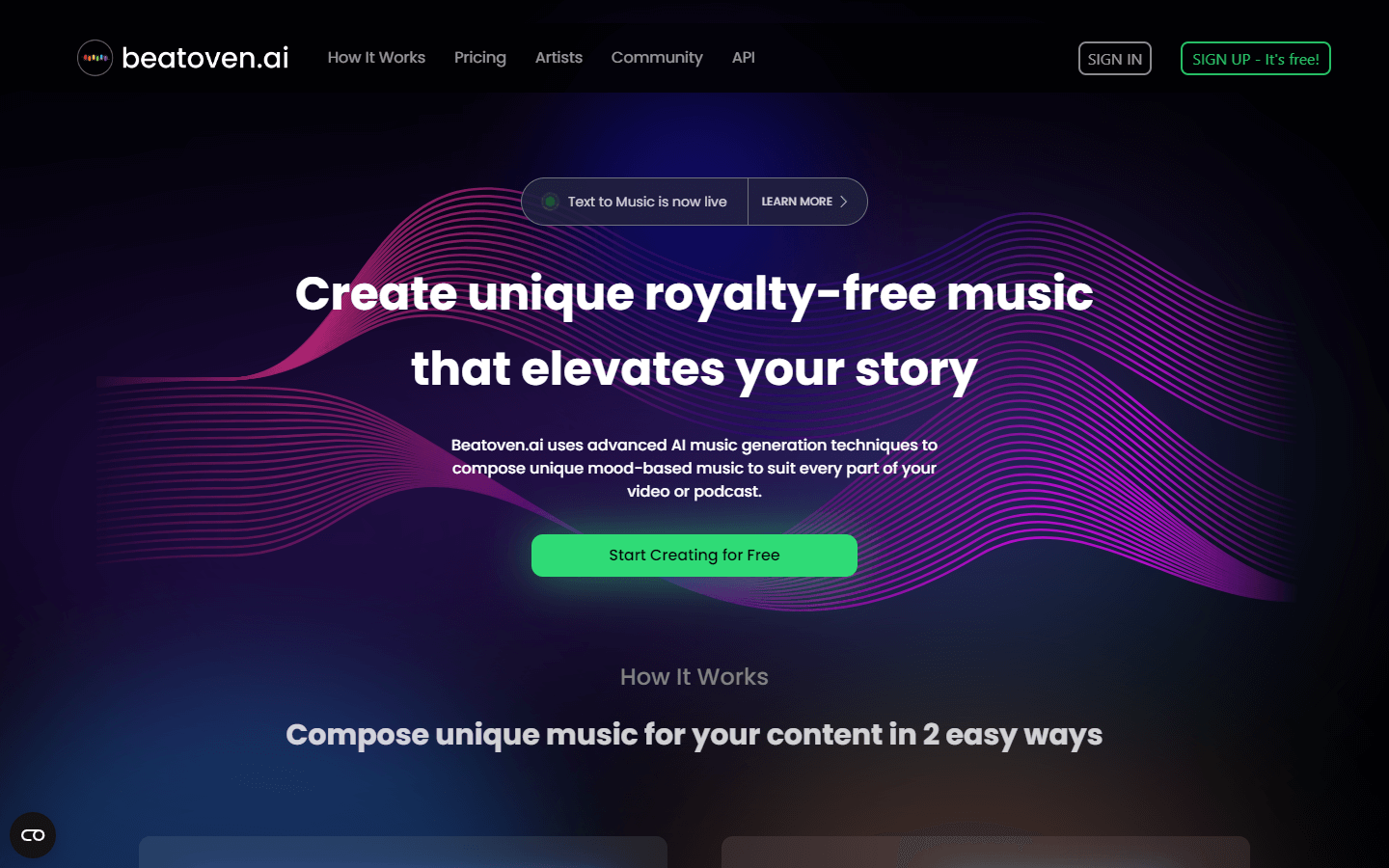
The scale of displacement is staggering. Through Beatoven.ai alone, 1.5 million “creators” have generated over 6 million AI tracks. The AI music market, valued at $3.9 billion in 2023, is projected to reach $38.7 billion by 2033 (25.8% CAGR).
This is a market explosion fuelled by rapid technological development that is designed to replace human composers entirely.The economics are brutally simple. Advertising agencies that once hired composers for thousands of dollars per jingle now generate soundtracks in minutes using AI tools. Game developers automate background scores, eliminating contracts that sustained composers between major projects. Stock music libraries that were once reliable revenue streams, are being flooded with AI-generated alternatives at fraction-of-a-penny costs.
For corporate clients, the value proposition is irresistible!
AI-generated music offers “cost efficiency” by eliminating the expense of hiring professional musicians. No negotiations, No royalties, No humans.
Jobs at the Edges Disappear First | The CNM Warning
The Centre National de la Musique’s 2025 sector mapping provided a clinical diagnosis of how AI is systematically inserting itself across music production, composition, and promotion; precisely the tasks that provided stable income for working musicians. The CNM report documented how generative AI is
“calling into question established creative and service processes, from writing in the studio to live performances, from conception to promotion.”
The elimination follows an alarmingly predictable pattern. Jobs at the edges disappear first. The “boring” commercial work that once earned composers thousands annually (Stock music, jingles, game soundtracks, ambient cue music etc.) is now being automated away.
A new global study predicts that music sector workers may lose more than 25% of their income to AI within the next four years.
Critically, 60% of musicians are already using AI tools, unaware of the fact that they are training the tools that threaten to replace them entirely. As musician Claire L. Evans of YACHT observed:
“I’m not interested in being a reactionary... but I also don’t want to jump into the trenches and welcome our new robot overlords.”
The sophistication of AI-generated music has reached a tipping point as 82% of listeners cannot distinguish AI-generated music from human-created compositions in blind tests.
When consumers can’t tell the difference and corporations can eliminate labour costs, the economic logic becomes inescapable.
What Dies When Only Superstars Survive? | Welcome To Music’s Hunger Games
The elimination of music’s middle class doesn’t just harm individual composers; it destroys the entire ecosystem that develops artistic talent, funds experimentation, and sustains cultural diversity.
The career development pipeline collapses. Commercial work historically funded artists while they developed their distinctive voices. Composers could take years to find their sound because jingle work paid the rent. Without that foundation, only artists with independent wealth or who achieve viral success can sustain careers.
Economic stability enables artistic risk-taking. Middle-class musicians could experiment because they had financial cushion from commercial work. Remove that safety net, and music becomes increasingly formulaic, optimized for algorithmic virality rather than artistic innovation.
Geographic and economic diversity vanishes. Middle-class musicians existed in smaller cities across the world, not just Los Angeles, New York, and Nashville. Their extinction means music production concentrates in expensive coastal hubs accessible only to the already-privileged.
Mentorship and knowledge transfer disappear. Experienced composers who earned from commercial work mentored the next generation. When commercial work evaporates, so does that institutional knowledge.
What remains is a dystopian binary of MEGA-STARS who can survive on the 0.1% streaming income or brand deals, and MILLIONS of UNPAID HOBBYISTS creating content for FREE. There’s no room for professionals in between.
As Pandora founder Tim Westergren reflected:
“We got sucked into the music industrial complex vortex.”
The industry has engineered a future where only superstars and algorithms survive.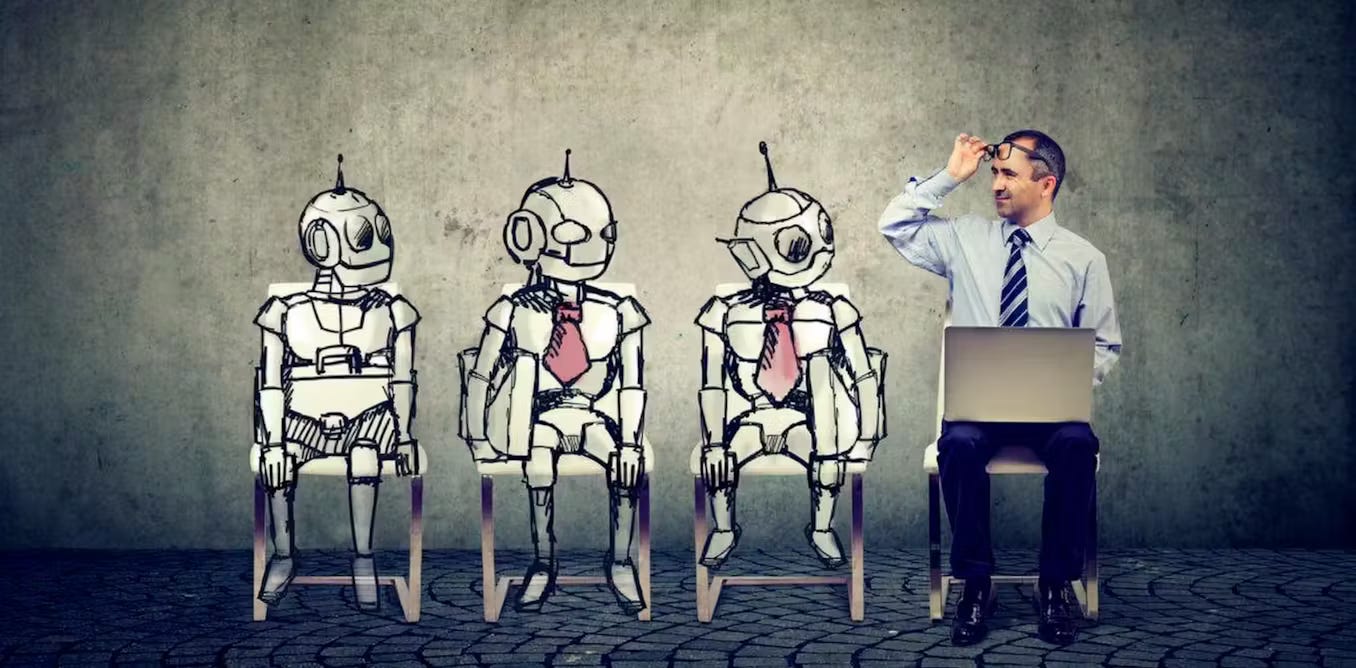
The Superstar-or-Starve Economy | No Room for Professionals
This transformation didn’t happen by accident. AI represents the final solution to what’s often described as the industry’s “artist problem” (the inconvenient fact that human musicians require compensation, creative control, and dignity.)
The generative AI music market is growing at 30.5% annually while platforms systematically reduce per-stream payouts.
The comparison to industrial automation is instructive. When blue-collar manufacturing jobs disappeared, society at least acknowledged the displacement and created (inadequate) safety nets. Creative workers facing AI displacement receive no equivalent protections. In fact, AI creative displacement is happening 10 times faster than industrial automation ever did.
An APRA AMCOS study of 4,200 artists found that 82% are concerned that AI could eliminate their ability to make a living from music entirely. By 2028, 24% of music creators’ revenues will be at risk due to generative AI. This is an estimated cumulative damage exceeding half a billion dollars in Australia alone.
Scale that globally, and the destruction becomes apocalyptic.The Cultural Fightback | What Must Change Now
The engineering of music’s working-class extinction is NOT inevitable technological progress. It’s a political and economic CHOICE. And some artists are beginning to fight back.
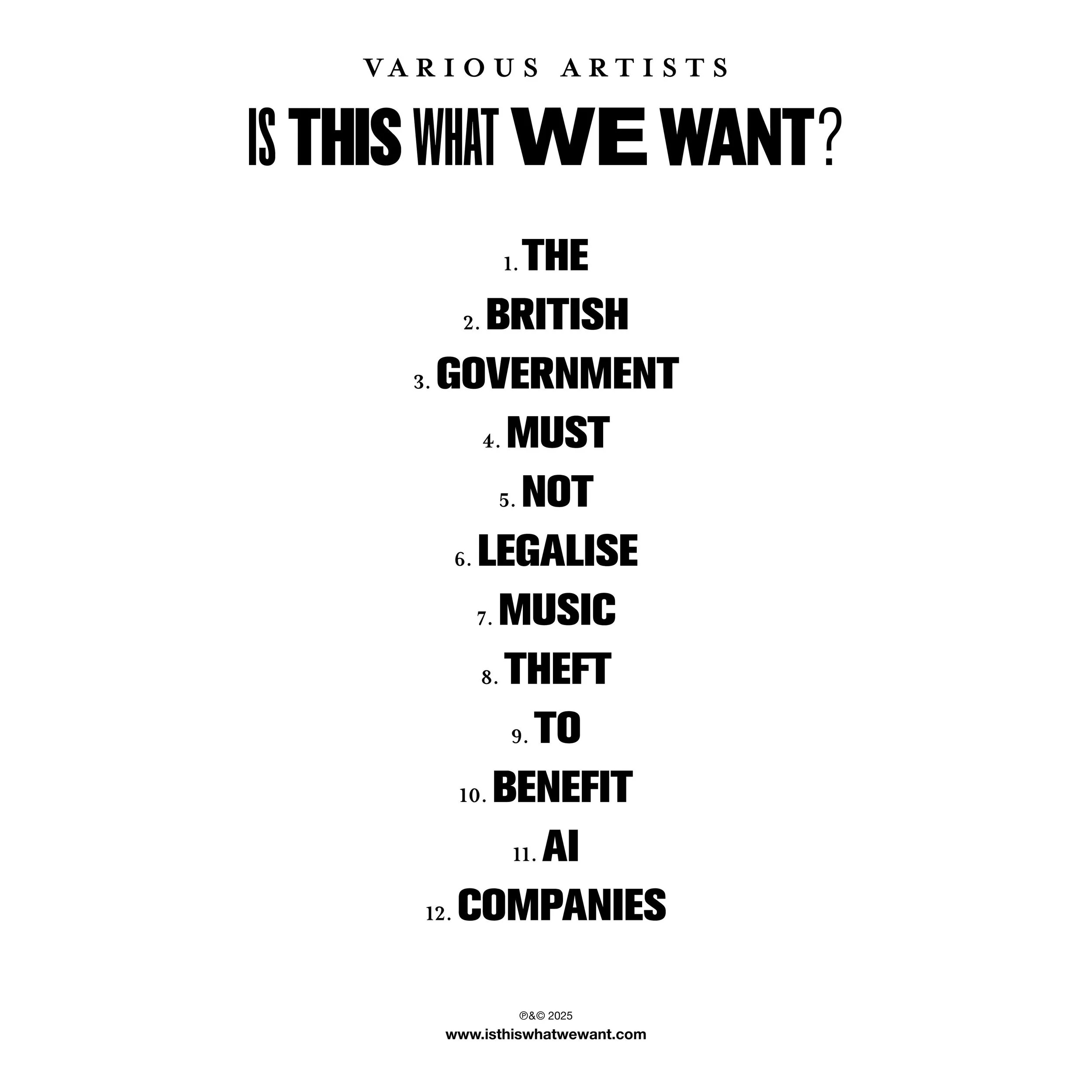
In February 2025, more than 1,000 British artists released “Is This What We Want?”
A silent album protesting the UK government’s planned changes to copyright law that would make it easier for AI companies to train models using copyrighted work without compensation. Their campaign, while currently unsuccessful, demonstrated a growing resistance.
More promising are structural interventions. Sweden’s STIM launched the world’s first collective AI music license in September 2025, creating a framework where AI companies can legally train on copyrighted music while royalties flow back to original songwriters. The license uses third-party attribution technology to trace each AI output back to the human-created works that influenced it, ensuring “revenues auditable in real time.”
STIM Acting CEO Lina Heyman framed it as a systemic intervention:
“We are establishing a scalable, democratic model for the industry. This is not just a commercial initiative but a blueprint for how rights and innovation policies can align, delivering fair compensation for creators and legal certainty for AI firms.”
As mentioned before, AI is projected to cannibalize up to 24% of music creators’ revenues by 2028; STIM’s model attempts to reclaim some of that loss.
Consumers (YOU) hold power too. Demand that platforms disclose AI-generated content. Support artists directly through platforms that pay fair rates. Recognize that when you stream, you’re voting with your attention for either a human ecosystem or an algorithmic monoculture.
The Choice Before Us
The death of music’s working class represents more than individual financial hardship. It’s the systematic elimination of the infrastructure that sustains cultural production itself.
When the only musicians who can survive are those born wealthy or who achieve lottery-like viral success, we lose the geographic diversity, the experimentation, the mentorship, and the artistic risk-taking that defines music’s creative ecosystem.
We will be left with algorithmic optimization and billionaire superstars in a cultural wasteland engineered for maximum corporate profit.Again, this is NOT an inevitable technological progress. It’s a wealth transfer executed through streaming exploitation and AI automation. The question is whether we’ll recognize it as such before the entire professional middle class disappears forever.
The backbone is already gone. What remains is chaos. But we have a choice about whether we rebuild something that values human creativity, or accept a future where only algorithms and superstars remain.
🫵🏼 Have YOU noticed the disappearance of music’s middle class in your own community? What are YOU doing to support working musicians?
💬 Share your thoughts below! This conversation is crucial for the survival of human creativity.
🤝🏼 Join us at Vinyl Culture as we continue exploring ways to preserve and evolve an authentic music culture in an age dominated by algorithms and corporate interests. We are building something that will revolutionize the music industry by creating an Artist-centred and Community-driven platform, leveraging both the offline & online medium. We will empower artists by allowing them to share their art and creativity directly with the fans. More on this soon…
2️⃣0️⃣0️⃣0️⃣+ SUBSCRIBERS have now joined our mission to protect The Soul of Music in the age of algorithmic manipulation & AI. Thanks a lot to each & every one of you!! 🫵🏼 🤝🏼🙌🏻 Together, we can make a difference.


Thanks for this work. As an independent artist it’s infuriating. We keep getting squeezed with no viable alternatives. Spotify streams/monthly listeners is still the go to metric for industry cache/show booking/etc. yet it’s more and more just a question of an algorithm pushing what it wants (aka cheap AI content that Spotify owns). Appreciate you spelling it out so well and spreading the word.
I thought we would use AI to cure cancer, not kill the poets…