


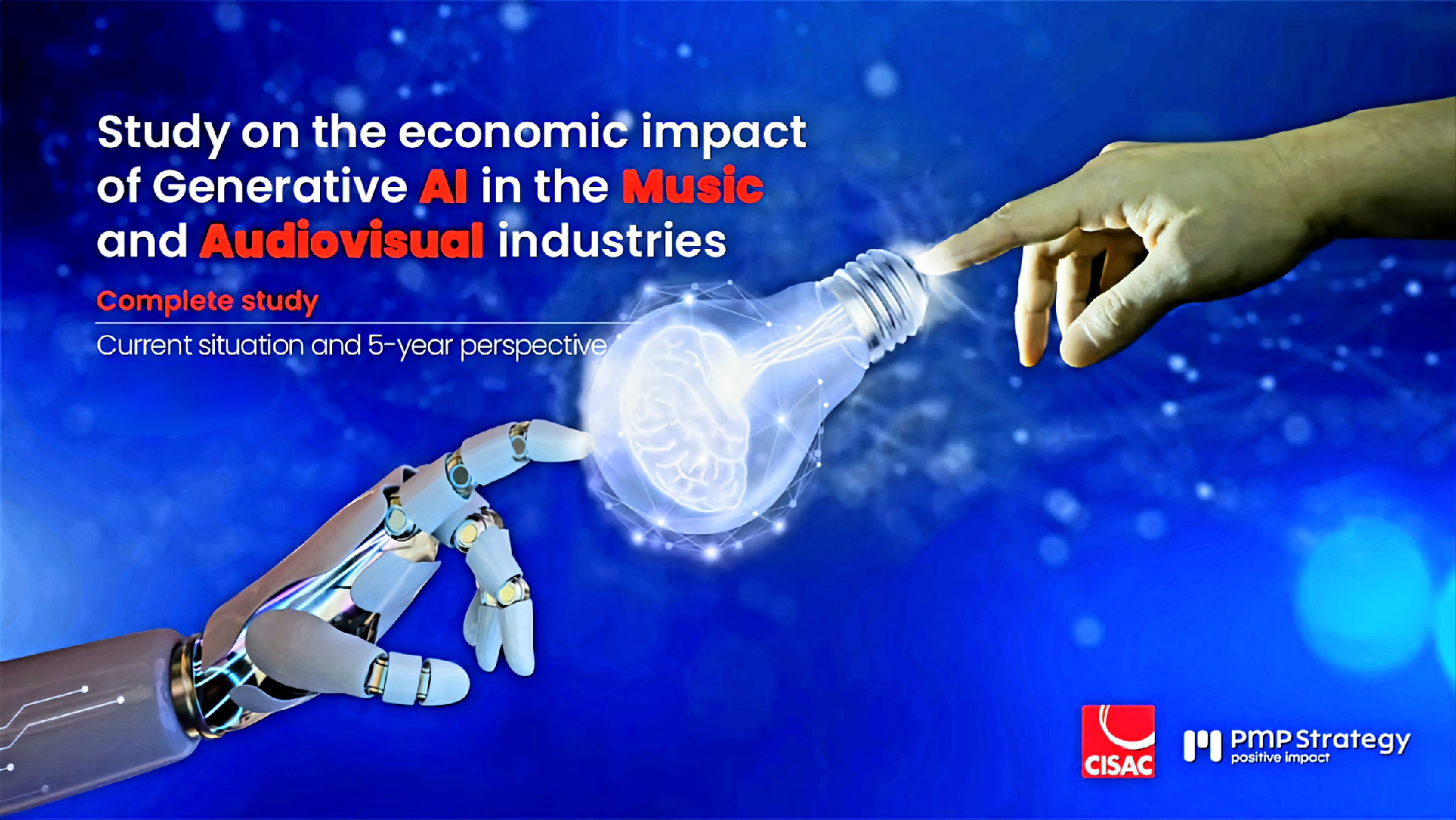
The music industry is facing an unprecedented threat that makes the streaming revolution look like child's play. A ground-breaking global study by CISAC (International Confederation of Societies of Authors and Composers) has delivered a stark warning:
24% of musicians' income could vanish by 2028, while tech companies reap billions from AI-generated content trained on artists' work without permission.
This isn't a distant dystopian future; it's happening RIGHT NOW. As generative AI transforms from an experimental tool to a mainstream content creator, human musicians find themselves caught in an economic squeeze that threatens to fundamentally alter how we create, consume, and value music.
The Numbers Don't Lie
The CISAC report, conducted by PMP Strategy, paints a sobering picture of the creative economy's immediate future.
Music creators face a cumulative loss of €10 billion ($10.5 billion) between 2023 and 2028, with annual losses reaching €4 billion ($4.2 billion) by 2028 alone.
Meanwhile, the market for generative AI music content is projected to explode from €3 billion ($3.2 billion) today to a staggering €64 billion ($68 billion) by 2028.
This represents more than market disruption. It's economic displacement on an industrial scale. The report estimates that AI services in music will generate €9 billion ($9.5 billion) in annual revenues by 2028, up from just €0.3 billion ($0.32 billion) currently. Every dollar flowing to AI platforms represents potential income diverted from human creators who spent years developing their craft.
Audiovisual creators aren't spared either, facing a 21% revenue loss by 2028, bringing the total economic impact across both sectors to €22 billion ($23.1 billion). These statistics represent real artists struggling to make ends meet while algorithms trained on their work generate profits for tech companies.
The Reality Behind the Streams
Consider Tilly Louise, an indie pop musician from Liverpool whose story illustrates this economic paradox perfectly. Despite achieving ~35K monthly listeners on Spotify and creating what critics describe as "infectious, uplifting" music with "genuine lyrics that connect with listeners," she still maintains a day job. Her experience mirrors countless independent artists who have built substantial streaming audiences but can't translate those numbers into sustainable income.
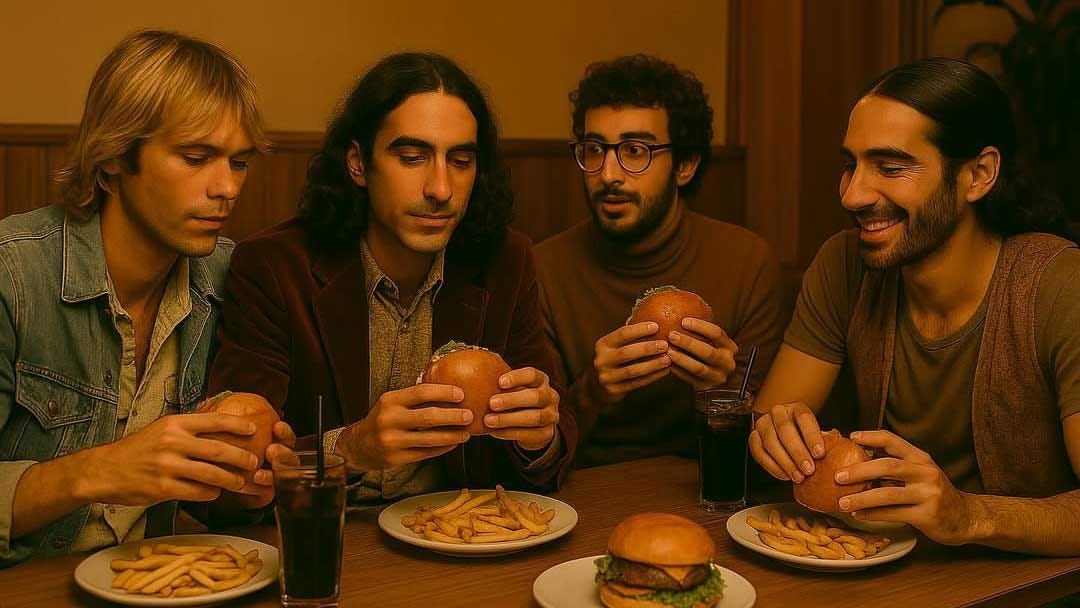
This economic struggle becomes even more frustrating when contrasted with AI success stories like The Velvet Sundown, a FAKE "psychedelic rock band" that accumulated over one million monthly listeners on Spotify despite being entirely generated by artificial intelligence. The project, which styles itself as a 1960s psych-pop act complete with “retro imagery,” earned an estimated $34,235 over just 30 days across streaming platforms, according to ChartMasters' streaming royalties calculator.
The Velvet Sundown's rapid ascent demonstrated by reaching over half a million streams within days of appearing on Spotify shows how AI-generated content can achieve viral success through playlist placements and algorithmic boosts. Their Spotify bio now openly admits:
"The Velvet Sundown is a synthetic music project directed by human creativity, and crafted, voiced, and visualized with the aid of artificial intelligence."
The Training Data Controversy
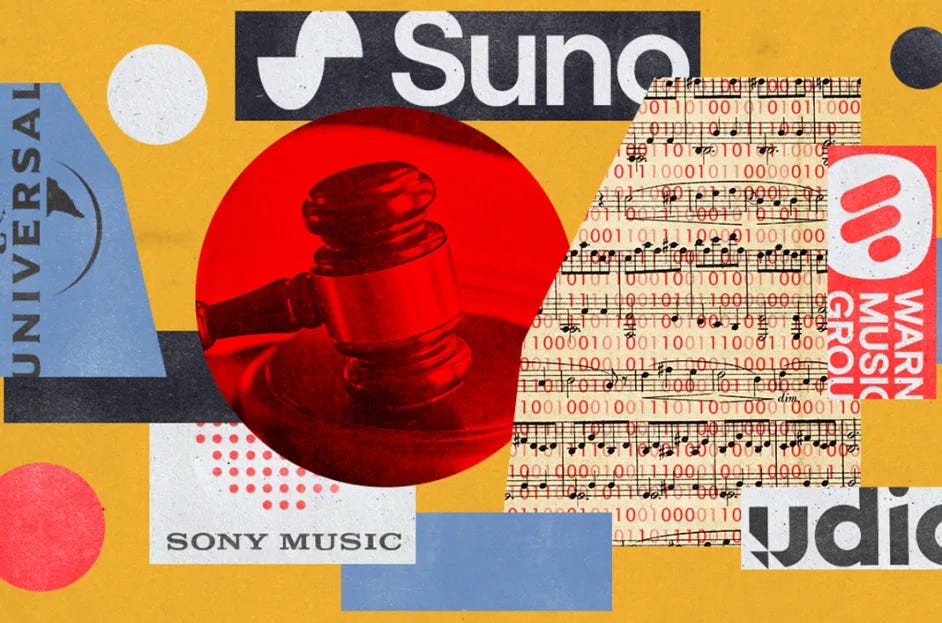
At the heart of this economic disruption lies a fundamental issue of consent and compensation. Major AI music platforms like Suno and Udio have built their systems by training on vast catalogs of copyrighted music without permission from creators or rights holders. As Suno acknowledged in legal filings:
"It is no secret that the tens of millions of recordings that Suno's model was trained on presumably included recordings whose rights are owned by the Plaintiffs in this case."
This practice has sparked landmark lawsuits from major record labels Sony Music, Universal Music Group, and Warner Music Group, who argue that using copyrighted works as training data without authorization constitutes massive copyright infringement. The Recording Industry Association of America (RIAA) described the situation bluntly:
"After months of evading and misleading, defendants have finally admitted their massive unlicensed copying of artists' recordings."
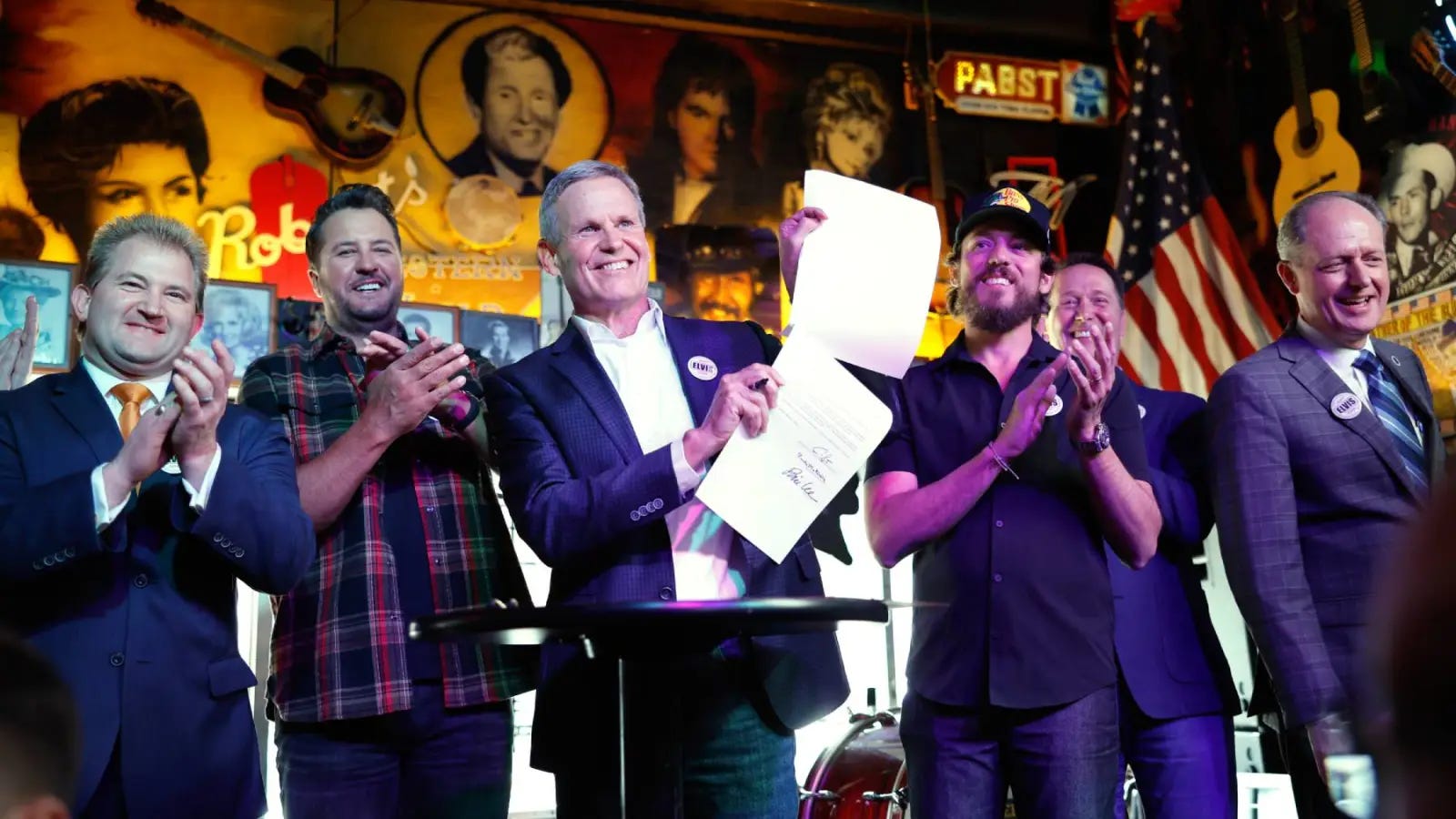
The legal implications extend beyond traditional copyright concerns. Music involves multiple layers of rights, including both sound recording copyrights and underlying musical composition copyrights, making the unauthorized use particularly complex. Recent legislation like Tennessee's ELVIS Act specifically targets AI voice cloning, making unauthorized digital replication of an artist's voice a violation of publicity rights.
The Corporate Gold Rush
While musicians face an uncertain future, the industry's power brokers are scrambling to secure their piece of the AI revolution.
Universal Music Group, Warner Music Group, and Sony Music Entertainment are all engaged in active licensing negotiations with Suno and Udio; the same AI companies they are simultaneously suing for copyright infringement.
These major labels are pursuing a dual strategy by seeking both licensing fees for their catalogs and equity stakes in the AI companies that are fundamentally transforming music creation. The talks represent a pragmatic acknowledgment that AI-generated music isn't going away, and the labels want to ensure they profit regardless of the impact on human artists.
Meanwhile, Spotify has been busy restructuring its relationships with these same labels through new direct licensing agreements that bypass traditional royalty collection societies. Sony Music Group became the latest major to strike such a deal in September 2025, following Universal Music Group's agreement earlier this year. These arrangements allow Spotify to "unlock new growth" while labels gain more control over how their catalogs are monetized in the AI streaming age.
The corporate messaging around these deals focuses on "supporting songwriters" and "building dynamic ecosystems," but the underlying motivation is clear:
Maintaining revenue streams as AI transforms content creation. Record labels that spent decades fighting digital disruption have learned to adapt quickly, positioning themselves as gatekeepers in the AI era rather than defenders of human creativity.
The Algorithm Advantage
AI-generated music benefits from several structural advantages in the streaming economy. Unlike human artists who must navigate complex royalty splits between performers, songwriters, and producers, AI tracks often have simplified rights structures that allow for higher profit margins. Additionally, AI can generate content optimized for algorithmic discovery, creating tracks specifically designed to trigger streaming platform recommendation engines.
The Velvet Sundown's success exemplifies this phenomenon. Former Spotify data scientist Glenn McDonald noted that the project's rapid growth likely resulted from a combination of paid playlist placements and algorithm-driven recommendations that select songs based on audio characteristics rather than human curation.
This shift from human-curated playlists to algorithmic selection creates an environment where AI-generated content can compete on EQUAL terms with human creativity.
Music technology expert Jason Palamara observed that
"We've gotten to the point where AI is putting out songs that actually make sense structurally,"
describing The Velvet Sundown's production quality while warning this represents "just the beginning of a bigger trend." As AI-generated music becomes increasingly sophisticated and harder to distinguish from human-created content, the competitive disadvantage for human artists will only intensify.
The Fan Experience Crisis
Beyond economic concerns, the proliferation of AI-generated music threatens the fundamental relationship between artists and audiences. Music serves as more than entertainment; it's a form of human connection, cultural expression, and shared experience. When AI-generated content floods social media feeds and streaming algorithms, it becomes increasingly difficult for genuine human creativity to reach receptive audiences.
Industry professionals describe the current situation using terms like "soulless," "stiff," and "creepy," reflecting concerns that extend beyond simple competition to questions about the nature of artistic expression itself. While 79% of music fans believe human creativity remains essential to music creation, according to industry studies, the streaming economy doesn't inherently distinguish between human and AI-generated content when distributing revenue.
The risk extends to cultural diversity and artistic development.
Emerging artists traditionally use streaming platforms to build audiences and develop their craft through audience feedback. If AI-generated content increasingly dominates discovery algorithms, fewer opportunities exist for new human artists to break through and establish careers.
Fighting Back
CISAC President and ABBA founding member Björn Ulvaeus emphasized that
"This will be the greatest revolution the creative sector has ever seen, and it cannot be that only tech companies and legislators are at the decision-making table."
The organization advocates for regulatory frameworks that ensure AI development benefits human creativity rather than replacing it.
The solution requires balancing innovation with protection. AI tools can possibly enhance human creativity, however, the current model of training AI on copyrighted works without consent or compensation fundamentally undermines the economic foundation that supports human creativity.
Legislative efforts are also advancing. Beyond Tennessee's ELVIS Act, US federal lawmakers have introduced the NO FAKES Act, which would create nationwide protection against unauthorized digital replicas of individuals' personas. These laws recognize that AI's threat to creators extends beyond traditional copyright to fundamental questions of identity and artistic integrity.
The Path Forward
Moving forward, the industry must establish some clear principles, such as:
AI training should require explicit permission from rights holders.
Creators should receive fair compensation when their work contributes to AI training datasets.
Platforms must implement systems to distinguish between human and AI-generated content for both audiences and royalty distribution.
The stakes extend far beyond individual artist income. Music reflects human culture, emotion, and experience in ways that artificial intelligence cannot replicate.
While AI might generate technically proficient compositions, it cannot capture the lived experiences, cultural contexts, and emotional authenticity that make music meaningful to human audiences.
As we approach 2028, the choices made today will determine whether artificial intelligence serves as a tool to enhance human creativity or as a replacement that diminishes the value of human artistic expression. The 24% wipeout predicted by CISAC represents a dire warning about the kind of creative culture we are building for the future.
The question isn't whether AI will continue advancing in music creation; it will (because people in power are GREEDY.)
The question is whether we'll structure this advancement to support human creativity or to replace it entirely. For millions of independent artists worldwide, the answer will determine not just their economic futures, but the future of music as a fundamentally HUMAN art form.
🫵🏼 What's YOUR take? Are we watching the death of human creativity or its evolution?
💬 Share your thoughts below! This conversation is crucial for the survival of human creativity.
🤝🏼 Join us at Vinyl Culture as we continue exploring ways to preserve and evolve an authentic music culture in an age dominated by algorithms and corporate interests. We are building something that will revolutionize the music industry by creating an Artist-centred and Community-driven platform, leveraging both the offline & online medium. We will empower artists by allowing them to share their art and creativity directly with the fans. More on this soon…
2️⃣0️⃣0️⃣0️⃣+ SUBSCRIBERS have now joined our mission to protect The Soul of Music in the age of algorithmic manipulation & AI. Thanks a lot to each & every one of you!! 🫵🏼 🤝🏼🙌🏻 Together, we can make a difference.
🔗 Human creators’ future at risk from generative AI | CISAC
Read More About The Music Industry’s Secrets 📚🔗:


Great article. Thanks you
No streaming platforms playing my music for pennies. I prefer to give it away for free.